The preparation for a journey like DOG TROTTER is not just about maps, camping gear, ferries, fuel stations or learning how to survive on terrible gas-station coffee and suspicious cinnamon buns somewhere north of the Arctic Circle.
It’s about learning how to live together.
For two months, me and my dog Seze will share tiny spaces, endless roads, silence, rain, campsites, ferries, forests, supermarkets, strangers, long waits and moments where there will be absolutely nobody around for kilometers except wind, rocks and a very opinionated mosquito population. Humanity truly reached the stars and still lost the war against mosquitoes. Remarkable species.
Sometimes we’ll be deep in nature, isolated and alone.
Other times we’ll be surrounded by people who love this same lifestyle: campers, hikers, dog trainers, travelers, families, ferry passengers, hotel staff and curious strangers who will inevitably say something like: “Beautiful dog.”
And honestly, this strange partnership between humans and dogs probably began thousands of years ago for exactly this reason.
Not necessarily to win trophies, post motivational reels or buy sand-colored tactical leashes with titanium buckles.
But because traveling through the world feels a little less lonely when someone walks beside you willingly.
A journey built around improvisation demands adaptability.
Plans change. Weather changes. Campsites fill up. Ferries are noisy. Supermarkets don’t allow dogs inside. Reindeer appear where your brain expected absolutely nothing except silence and poor life decisions.
That’s why preparation matters.
Just like I’ve been training physically and mentally for this adventure, Seze has been preparing too.
Not through military-style obedience or robotic perfection, but by learning how to stay calm, adaptable and emotionally stable in situations that real travelers face every day.
Over the past months, we’ve been simulating environments and experiences she’ll encounter during the trip:
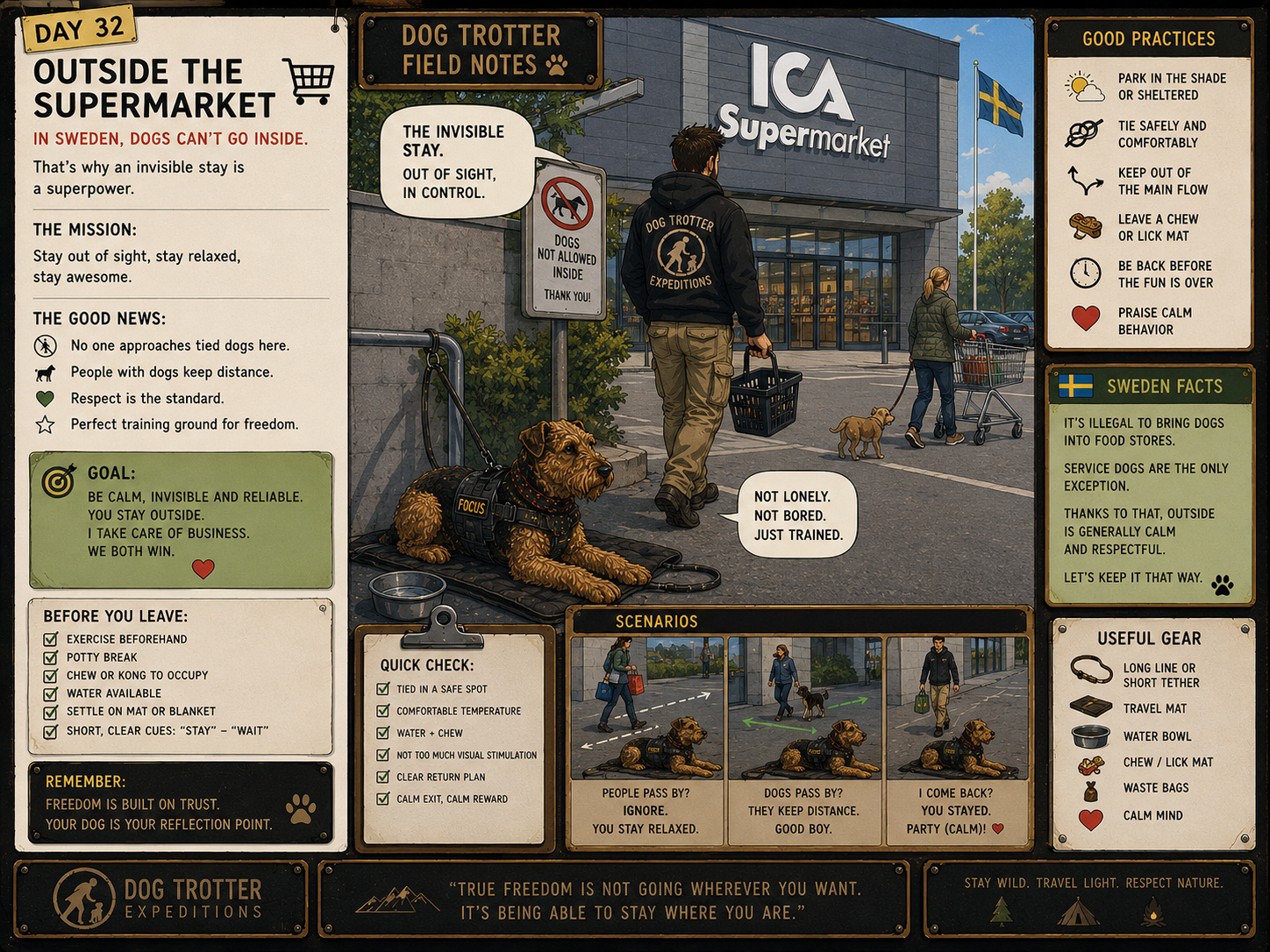
- waiting outside supermarkets in Sweden
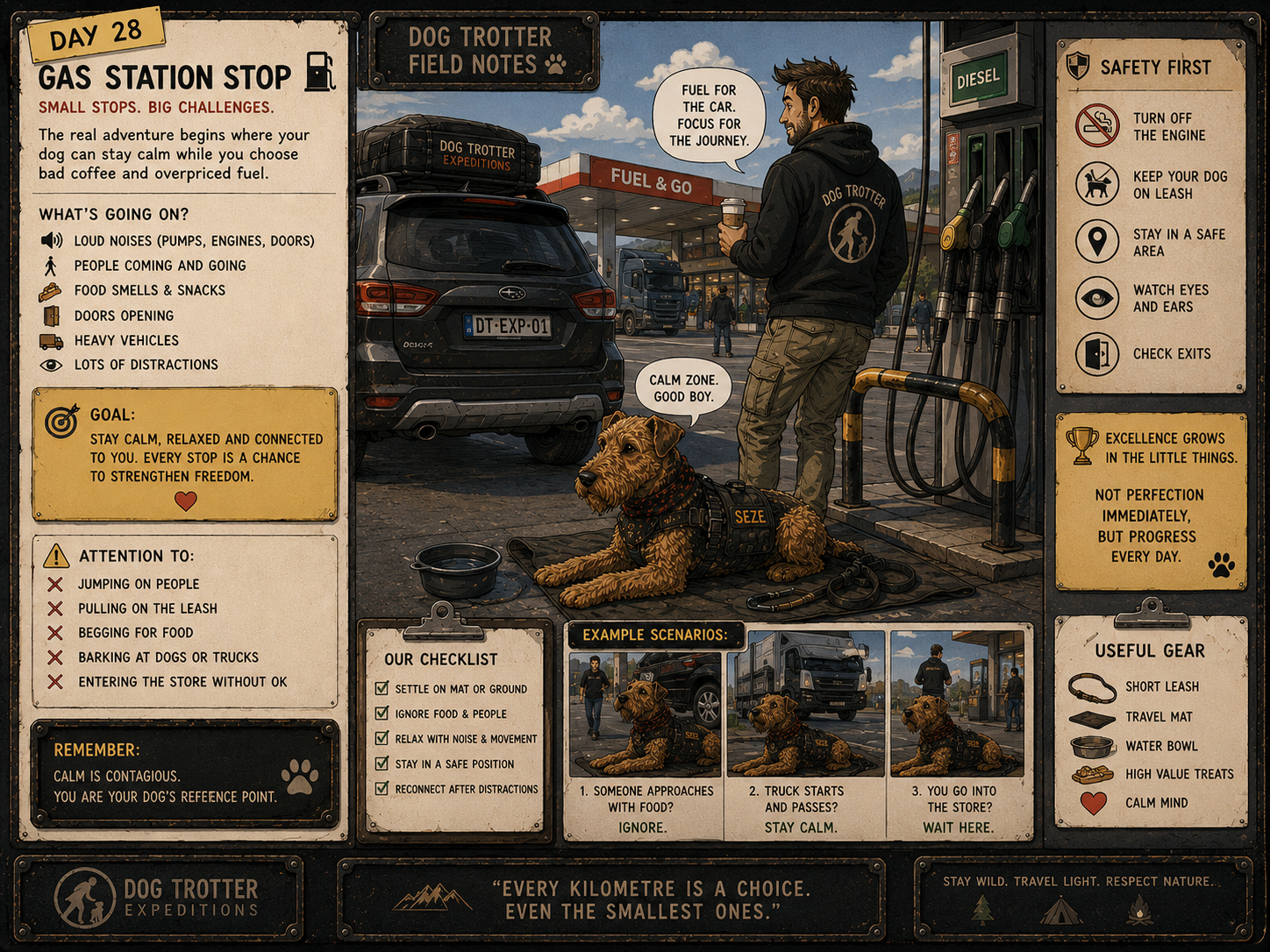
- relaxing at gas stations full of noise and movement
- staying calm in campsites around strangers and dogs
- ferry rides and crowded public areas
- settling quietly inside a tent
- ignoring distractions
- handling long periods of travel and downtime
- staying connected to me without constant commands
Because the real goal isn’t a “perfect dog.”
The goal is freedom.
A dog that can quietly exist beside you almost anywhere in the world opens doors to experiences that anxious, reactive or overstimulated dogs simply cannot enjoy safely.
And more importantly:
a calm dog usually means a calmer human too. Which is inconveniently wholesome, but there it is.
So this series of articles will follow the practical preparation behind DOG TROTTER.
Not theory from a sterile classroom. Real travel situations. Real training. Real mistakes. Real adaptation.
One small scenario at a time.
One kilometer at a time.
One dog learning how to travel through the world with confidence.
And maybe one human trying to deserve that trust a little better every day.
 Dog Trotter
👍👍👍👍👍
"Mi piace"Piace a 1 persona